









Introduction#
A tiger cub amigurumi is one of the most lovable crochet animals you can make. It has that perfect mix of “wild” and “cute”: bright orange fur, bold black stripes, a soft white muzzle, and oversized paws that make the whole plush look extra cuddly. It’s also the kind of handmade toy that looks impressive on a shelf, but still feels friendly and gentle enough for nursery décor or gifting.
Explore more beginner amigurumi crochet patterns in our pattern library.
This crochet pattern is designed to help you create a sitting tiger cub with a rounded head, expressive eyes, a sweet snout, and neat stripe placement. The body is shaped for a stable seated pose, with chunky front paws and a curled tail. The look is detailed, but the stitches remain beginner-friendly—mostly single crochet with smart colorwork and finishing techniques.
In this crochet tutorial, you’ll learn how to build the tiger step-by-step, how to handle stripes without messy color changes, and how to assemble everything so your tiger cub looks polished and professional.
Detailed Description of the Crochet Pattern#
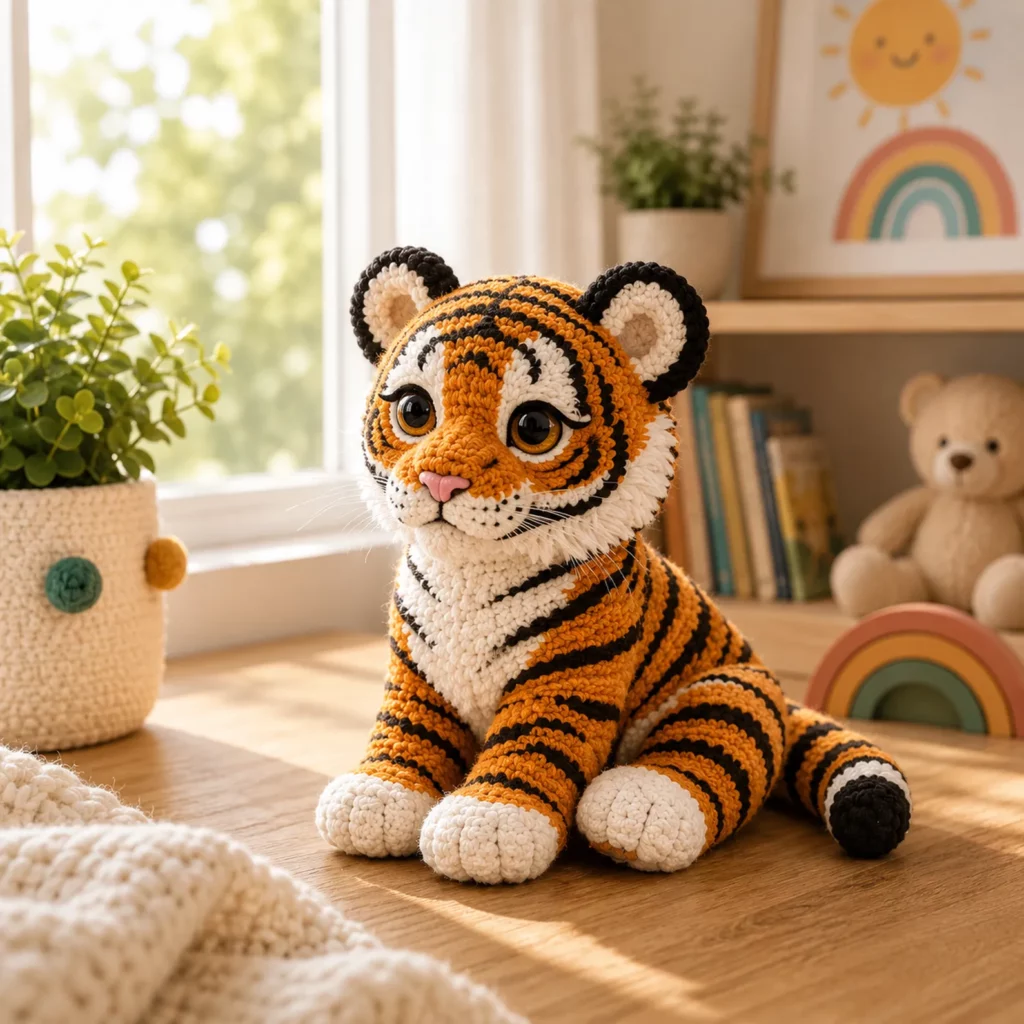
This tiger cub plush has a classic amigurumi style with realistic touches. The head is slightly larger than the body for a cute “baby animal” proportion. The muzzle is white and raised, giving dimension and space for a tiny embroidered nose and mouth. The ears are rounded with contrasting inner ear color and a dark edge. The body is compact and sits naturally, supported by wide paws and a slightly flattened base.
The stripes are the signature feature. Instead of complicated tapestry crochet, the cleanest approach for a tiger is to use surface crochet or embroidered stripes after the body is finished. This keeps the orange fabric smooth, avoids jagged color changes, and lets you control stripe placement so it looks symmetrical.
Key features you will crochet
- Rounded head with a cute cub face
- White muzzle and chest panel
- Small rounded ears with contrasting inner ear
- Thick front paws and smaller back paws for a sitting pose
- Tail with a dark tip
- Stripe pattern added neatly after shaping for a professional finish
- Optional whiskers and blush for extra personality
Skill Level Explanation#
This is a confident beginner to intermediate crochet pattern.
You’ll be comfortable if you can
- Crochet single crochet in continuous rounds
- Increase and decrease evenly
- Sew parts together neatly
- Embroider simple details (nose, mouth, optional stripes)
You’ll practice
- Shaping a sitting plush that doesn’t tip
- Using surface crochet for stripes (very beginner-friendly once you try it)
- Symmetrical placement of ears, muzzle, and facial features
- Adding texture details like whisker dots and eyelids
If you’ve made amigurumi animals like bears, cats, or foxes, this tiger cub is a fun next step.
Materials Needed#
Yarn
Smooth yarn is ideal so the stripes and face details look crisp.
Recommended yarn weight
- DK weight for a smaller, detailed cub
- Worsted weight for a medium plush cub
Suggested colors
- Orange for the main body
- White or cream for muzzle, cheeks, chest, and paw tips
- Black for stripes, ear edges, and tail tip
- Pink for nose (or light pink yarn for embroidery)
Yarn tips
- Cotton gives clean stitch definition and sharp stripes
- Acrylic is softer and great for plush toys
- Avoid fuzzy yarn because it blurs stripe edges and facial embroidery
Hook
Use a smaller hook than the yarn label suggests so stuffing doesn’t show.
- DK: 2.75 mm to 3.25 mm
- Worsted: 3.25 mm to 4.0 mm
Notions
- Stitch marker
- Tapestry needle
- Scissors
- Fiberfill stuffing
- Safety eyes (10 to 14 mm) or embroidery floss
- Black embroidery floss or thin black yarn for stripes and facial details
- Optional fishing line or thread for whiskers (display only)
Safety note
For small children, embroider eyes and avoid whiskers made from fishing line.
Stitches & Techniques Explained#
Abbreviations in US terms
- MR magic ring
- ch chain
- sl st slip stitch
- sc single crochet
- inc increase
- dec decrease
- st stitch
Invisible decrease
Use invisible decrease for a smoother face and body: pick up the front loops of the next two stitches and sc them together.
Surface crochet stripes
Surface crochet is one of the best ways to add tiger stripes. You insert your hook into the fabric and crochet slip stitches on the surface to draw stripes. It looks clean and controlled, and you can remove and redo stripes easily if you don’t like placement.
Sitting base shaping
A sitting plush looks best when the body base is slightly flat. You can achieve this by
- Stuffing the bottom more firmly
- Slightly flattening the base with your hands before closing
- Attaching paws so they act like little supports
Step-by-Step Instructions#
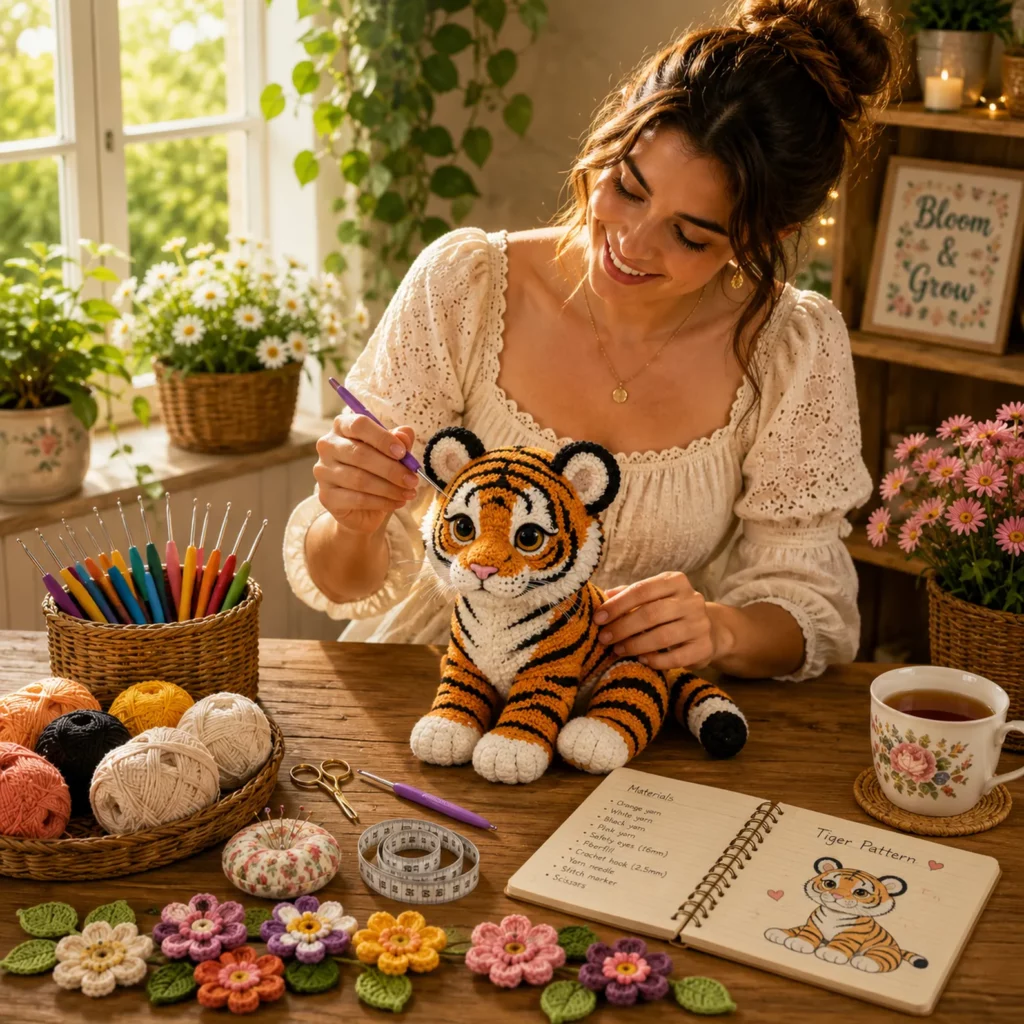
Work in continuous rounds unless stated. Use a stitch marker. This free crochet pattern is written in tutorial style so you can adjust size easily.
Finished size
Varies by yarn, but a tiger like this typically ends up around 18 to 28 cm tall when seated.
Notes
- Insert eyes before fully stuffing the head
- Stuff firmly but do not overstretch stitches
- Pin everything before sewing
Head (orange)
Round 1
- 6 sc in MR (6)
Round 2
- inc around (12)
Round 3
- (sc, inc) around (18)
Round 4
- (2 sc, inc) around (24)
Round 5
- (3 sc, inc) around (30)
Round 6
- (4 sc, inc) around (36)
Round 7
- (5 sc, inc) around (42)
Rounds 8 to 13
- sc around (42)
Eye placement
- Place eyes between rounds 10 and 11
- Space them about 8 to 10 stitches apart
- For a “baby cub” look, place eyes slightly lower and closer together
Begin shaping down
Round 14
- (5 sc, dec) around (36)
Round 15
- sc around (36)
Round 16
- (4 sc, dec) around (30)
Round 17
- sc around (30)
Round 18
- (3 sc, dec) around (24)
Stuff firmly now.
Round 19
- (2 sc, dec) around (18)
Round 20
- (sc, dec) around (12)
Round 21
- dec around (6)
Fasten off and close.
Muzzle (white)
Round 1
- 6 sc in MR (6)
Round 2
- inc around (12)
Round 3
- (sc, inc) around (18)
Round 4
- (2 sc, inc) around (24)
Rounds 5 to 6
- sc around (24)
Round 7
- (2 sc, dec) around (18)
Round 8
- sc around (18)
Stuff lightly. Fasten off with a long tail.
Attach muzzle
- Center under the eyes
- Sew neatly with small stitches
- Add a tiny bit more stuffing right before closing if needed
Nose and mouth
- Nose: small triangle in pink (embroidered)
- Mouth: short vertical stitch down, then a gentle “W” smile
- Whisker dots: tiny black stitches on each side of muzzle
Ears (make two)
Outer ear (orange)
Round 1
- 6 sc in MR (6)
Round 2
- (sc, inc) around (9)
Round 3
- sc around (9)
Round 4
- (2 sc, inc) around (12)
Round 5
- sc around (12)
Flatten and close by sc across. Fasten off with tail.
Inner ear (white, optional)
- Ch 6, sc across (5)
- Next row sc2tog, sc, sc2tog (3)
Fasten off and sew inside ear.
Optional black ear edging
- With black, sc around the outer ear edge for a crisp outline
Sew ears to head
- Place on top sides
- Angle slightly outward
- Keep symmetrical by measuring from the center top line
Body (orange, sitting shape)
Round 1
- 6 sc in MR (6)
Round 2
- inc around (12)
Round 3
- (sc, inc) around (18)
Round 4
- (2 sc, inc) around (24)
Round 5
- (3 sc, inc) around (30)
Round 6
- (4 sc, inc) around (36)
Rounds 7 to 12
- sc around (36)
Belly shaping
Round 13
- (5 sc, inc) around (42)
Rounds 14 to 18
- sc around (42)
Taper for the bottom
Round 19
- (5 sc, dec) around (36)
Round 20
- sc around (36)
Round 21
- (4 sc, dec) around (30)
Round 22
- sc around (30)
Stuff firmly, flatten the base slightly.
Round 23
- (3 sc, dec) around (24)
Round 24
- (2 sc, dec) around (18)
Round 25
- (sc, dec) around (12)
Round 26
- dec around (6)
Fasten off and close.
Optional white chest patch
- Ch 10, sc across (9)
- Work 6 to 10 rows, then sew to chest
Front paws (make two)
Start with white, then switch to orange.
Round 1
- 6 sc in MR (6)
Round 2
- inc around (12)
Round 3
- (sc, inc) around (18)
Rounds 4 to 5
- sc around (18)
Switch to orange
Round 6
- sc around (18)
Taper slightly into arm
Round 7
- (4 sc, dec) around (15)
Rounds 8 to 14
- sc around (15)
Stuff firmly. Flatten slightly at the paw base.
Fasten off with tail.
Back paws (make two)
Smaller than front paws.
Round 1
- 6 sc in MR (6)
Round 2
- inc around (12)
Round 3
- sc around (12)
Switch colors if desired (white toe tips)
Rounds 4 to 8
- sc around (12)
Stuff lightly. Fasten off.
Tail (orange with black tip)
Start with black.
Round 1
- 6 sc in MR (6)
Rounds 2 to 4
- sc around (6)
Switch to orange
Rounds 5 to 18
- sc around (6)
Stuff lightly. Fasten off with tail. Sew to back of body.
Stripes#
This is the finishing step that gives the tiger its personality.
Option one surface crochet stripes (recommended)
- Use black yarn
- Insert hook into the body fabric and make slip stitches on the surface
- Create curved stripes on head, arms, body, and tail
- Keep stripes thicker on the body and thinner on the face for a realistic look
Stripe placement guide
- Face: small curved lines near forehead and cheeks
- Body: several curved stripes from shoulder down to back
- Arms: 2 to 3 stripes each
- Tail: rings or short stripes
Option two embroidered stripes
- Use black embroidery floss
- Stitch short satin stitches or backstitch lines
This is slower but very controlled.
Assembly#
Assembly order
- Sew muzzle to head and add face embroidery
- Sew ears to head
- Sew head to body
- Attach front paws slightly forward
- Attach back paws slightly outward to support sitting
- Sew tail
- Add stripes last so you can place them around seams neatly
Balance tip
Before sewing paws permanently, set the body on a table and test the sitting pose. Adjust paw placement until it sits naturally without tipping.
Common Mistakes and How to Avoid Them#
Stripes look messy
- Use surface crochet rather than in-round color changes
- Keep tension relaxed when surface crocheting so fabric doesn’t pucker
- Plan stripes lightly with pins or chalk before stitching
Tiger won’t sit evenly
- Flatten the base more while stuffing
- Spread back paws slightly wider
- Angle front paws forward as supports
Muzzle looks crooked
- Pin first and check symmetry from front and side
- Sew top edge first, then sides evenly
Head wobbles
- Stuff neck area firmly
- Sew with multiple passes around the join
Stuffing shows through
- Use a smaller hook
- Tighten tension
- Avoid overstuffing which stretches stitches
Expert Tips for Better Results#
- Add a tiny eyelid line above each eye with black embroidery for a gentle expression
- Use white yarn to add a small highlight stitch on the eye for sparkle
- Shape cheeks by adding a couple of tiny “pull” stitches from muzzle edge toward the side of the head
- Surface crochet stripes after full assembly so they flow naturally across pieces
- Weave ends as you go so finishing stays stress-free
Variations and Customization Ideas#
- White tiger version using white body and pale gray stripes
- Baby tiger keychain using sport yarn and embroidered eyes
- Bigger “plushie” tiger using chunky yarn and simplified stripes
- Add a tiny scarf or bow for a gift-ready look
- Add a small belly heart patch for a cute nursery theme
- Make a tiger family by changing yarn size and eye placement
Benefits of This Crochet Project#
- A high-impact crochet pattern that looks impressive and giftable
- Teaches stripe techniques without complicated colorwork
- Great practice for shaping, assembly, and facial embroidery
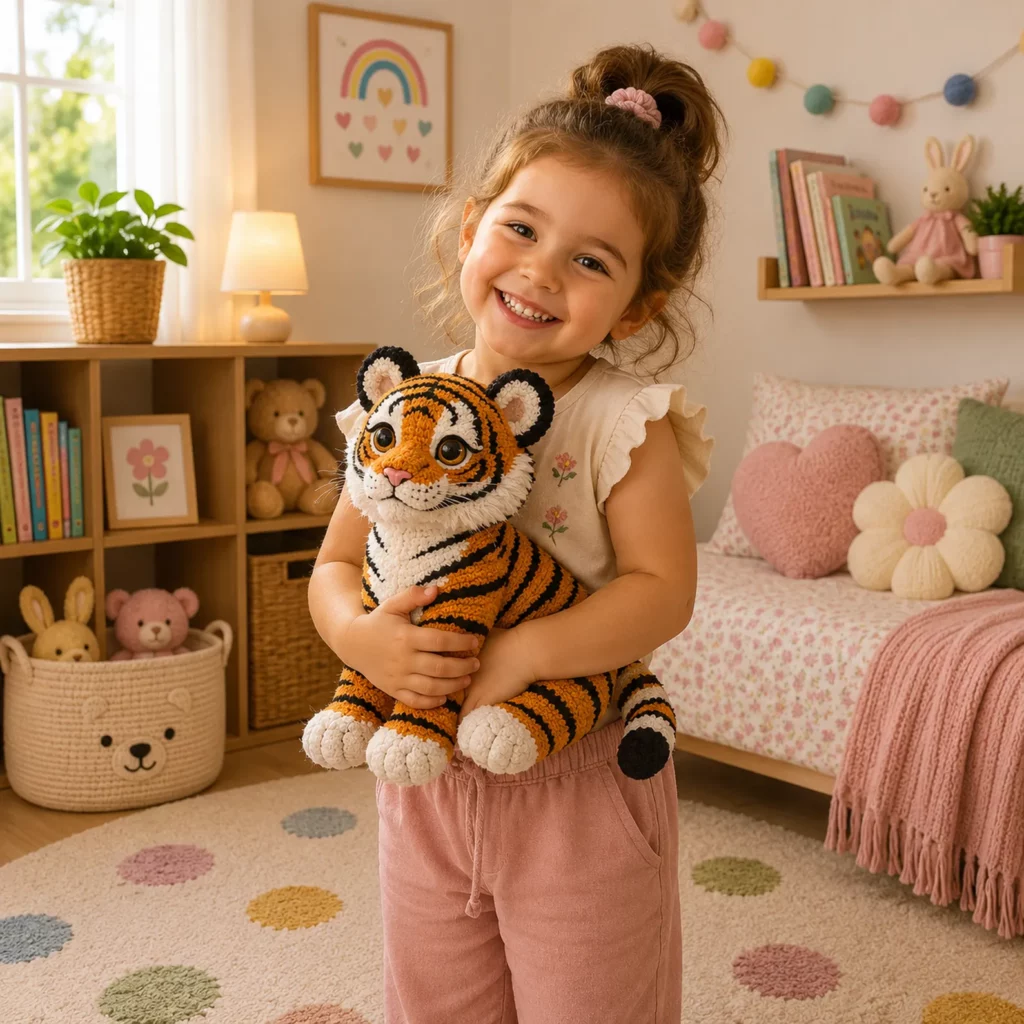
- Makes a sweet nursery plush and a fun handmade gift
- Customizable in size, expression, and stripe style
- Uses mostly basic stitches, so it’s relaxing once you get started
Internal Linking Suggestions#
- How to Crochet Invisible Decrease for Amigurumi
- Clean Color Change Tutorial for Crochet
- How to Surface Crochet Stripes and Details
- Best Yarn for Amigurumi With Tight Stitches
- How to Sew Amigurumi Parts Neatly
- How to Place Safety Eyes Symmetrically
- Free Crochet Jungle Animal Patterns Collection
FAQ#
Is this crochet pattern beginner-friendly
Yes for confident beginners. The stitches are simple; the main detail work is sewing and adding stripes neatly.
Do I have to crochet stripes into the body
No. Surface crochet or embroidery is easier and looks cleaner than in-round stripes for tiger designs.
Can I make this baby-safe
Yes. Embroider eyes instead of using safety eyes and avoid whiskers made from fishing line.
How do I make the tiger sit better
Stuff the base firmly, flatten the bottom slightly, and place back paws wider. The tail can also help as a support point if angled correctly.
What yarn is best for a tiger plush
Smooth cotton or acrylic works best for clean stripes and crisp face details. Fuzzy yarn can hide stripes and make the face less defined.
How do I resize the tiger cub
Use thicker yarn and a larger hook for a bigger cub, or thinner yarn for a smaller cub. Keep stitches tight so stuffing doesn’t show.
Conclusion#
This tiger cub amigurumi crochet pattern is the perfect combination of cute and impressive. The sitting pose, big paws, and sweet face make it instantly lovable, while the stripes give it that unmistakable tiger look. By using surface crochet or embroidery for stripes, you get a clean professional finish without stressful colorwork—so your tiger looks polished from every angle.
If you tell me your yarn weight and the size you want your tiger cub to be, I can suggest the best eye size and a simple stripe placement map so your finished plush looks perfectly balanced.