





Introduction#
A sweater vest is one of those pieces that instantly makes an outfit look pulled together—especially when it has that classic argyle diamond design. It’s cozy without being bulky, layers beautifully over a button-down or long-sleeve tee, and it’s practical for in-between weather when a full sweater feels like “too much.”
Explore more beginner sweaters crochet patterns in our pattern library.
This crochet pattern is designed to help you make a polished, wearable argyle vest in a way that’s actually manageable at home. You’ll build a clean V-neck vest shape with comfortable ribbing, then add the iconic diamond pattern using either simple color changes (intarsia-style) or an easier overlay method (surface slip stitch or duplicate stitch). Both options are included so you can choose what matches your skill level and patience.
If you’re new to garments, this is a great “first wearable” because there are no sleeves to fit, the shaping is straightforward, and the finished piece looks impressive. If you’re more experienced, you’ll love the customization: you can adjust the fit, change the color palette, and scale it up for older kids (or even adults) using the same construction.
Detailed Description of the Crochet Pattern#
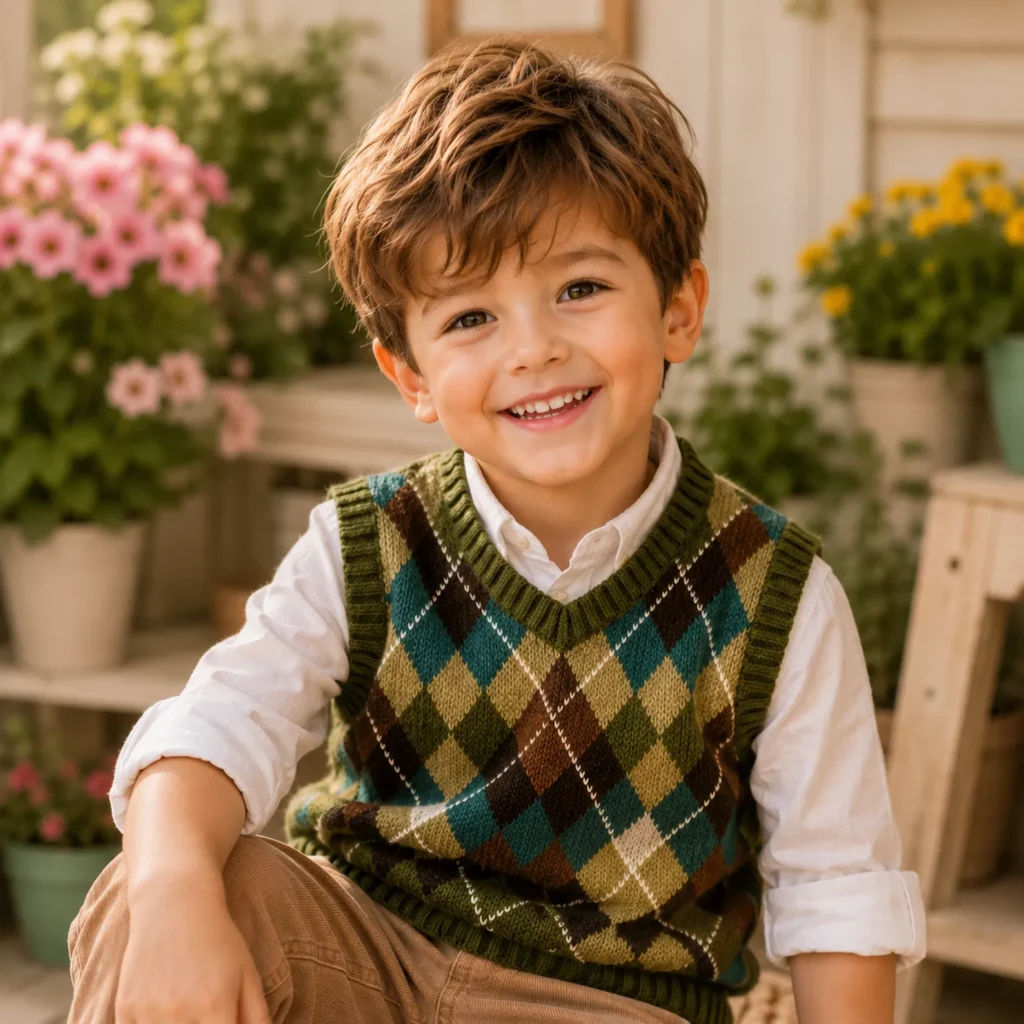
This project is a V-neck, sleeveless sweater vest with a classic argyle panel across the front. The overall style is structured and preppy: a ribbed hem, a neat V-neck trim, and clean armhole edging.
Construction components:
Front panel: worked bottom-up, with a centered V-neck split and optional argyle colorwork
Back panel: worked bottom-up, straight (no neckline shaping or only shallow shaping)
Shoulder seams: sewn or slip-stitched for a stable, tailored finish
Side seams: sewn to create the vest body and armholes
Ribbed hem and trims: added either as part of the fabric (ribbing rows) or as finishing rounds
Argyle diamonds: created via one of two methods
Intarsia-style color blocks (cleanest look, more yarn management)
Surface slip stitch / duplicate stitch on top of a solid base (easiest to control)
The argyle look comes from three visual layers:
The diamond blocks (main argyle colors)
The crisscross lines (often white or cream)
A strong neutral background (often olive, navy, charcoal, or tan)
You can keep the design subtle with earth tones or go bold with bright contrast.
Skill Level Explanation#
Skill Level: Confident Beginner to Intermediate
You’ll be comfortable with this easy crochet pattern if you can do:
Chain (ch)
Single crochet (sc)
Half double crochet (hdc) or double crochet (dc)
Working in rows and counting stitches
Basic seaming
You’ll also practice:
V-neck shaping (simple decreases)
Armhole shaping or clean armhole edging
Colorwork control (either intarsia or surface stitching)
Neck and hem ribbing techniques
If garments feel intimidating, this vest is a friendly entry point because fit is forgiving and you can try it on as you go.
Materials Needed#
Yarn
A smooth yarn with good stitch definition will show the argyle pattern best.
Recommended yarn weights:
DK (Category 3): lighter, drapier vest, great for layering
Worsted (Category 4): warmer, faster to crochet, more structured
Fiber suggestions:
Acrylic or acrylic-wool blend (durable and easy-care for kids)
Merino or wool blend (warmer, classic sweater look)
Cotton blend (less stretchy, crisp stitch definition)
Color palette (example set):
Color A (Background): olive green or deep neutral
Color B (Diamond 1): teal or blue-green
Color C (Diamond 2): tan or camel
Color D (Diamond 3): dark brown or charcoal
Color E (Argyle lines): white or cream
Yardage estimate (very approximate, depends on size and yarn weight):
Toddler (2–4T): 250–450 yards
Child (5–8): 450–650 yards
Big kid (9–12): 650–900 yards
Add 50–150 yards total if you’re doing full intarsia diamonds rather than surface stitching.
Hook
Choose a hook that creates a fabric that is flexible but not floppy.
DK: 4.0–4.5 mm
Worsted: 5.0–5.5 mm
If your fabric looks holey, go down a hook size.
Notions
Measuring tape
Stitch markers
Yarn needle
Scissors
Optional: bobbins or clothespins for managing intarsia yarn sections
Optional: blocking board and pins (helpful for crisp edges)
Stitches & Techniques Explained#
Common Abbreviations
ch = chain
sc = single crochet
hdc = half double crochet
dc = double crochet
sl st = slip stitch
st(s) = stitch(es)
RS/WS = right side / wrong side
rep = repeat
dec = decrease (work 2 stitches together)
BLO = back loop only
FLO = front loop only
Best Stitch Choice for This Vest
For a classic “knit-like” garment look in crochet, hdc works beautifully. It creates a tight, even fabric that behaves like a sweater.
Recommended body stitch: hdc in rows
Ribbing stitch: sc BLO (or hdc BLO) for stretch and structure
V-Neck Shaping
The front panel is split at the center, then each side is worked separately. You’ll decrease at the neckline edge every few rows to form a clean V.
Argyle Colorwork Options
Option 1: Intarsia-style diamonds
You change yarn colors inside the row to create true color blocks. The result looks most like classic argyle fabric. You’ll carry separate yarn “bobbins” for each color section.
Option 2: Surface slip stitch / duplicate stitch overlay
You crochet the vest in one background color, then stitch the diamond shapes and lines on top. This is easier to manage and great for beginners.
If this is your first colorwork wearable, the overlay method is the smoothest path.

Step-by-Step Instructions#
Finished Size and Fit
This pattern is written in an adjustable way. You’ll crochet to measurements instead of relying on one rigid stitch count.
Target fit:
A slightly relaxed vest that layers over a shirt
Hem should sit around high hip for kids
Armholes should be comfortable without gaping
Helpful measurements to take:
Chest circumference (around widest part)
Body length (from shoulder to hem)
Armhole depth (from shoulder down to underarm)
Neck depth (how deep you want the V)
Gauge (Recommended)
Make a 4 in x 4 in swatch in hdc.
A common gauge for DK is about 14–16 hdc and 10–12 rows per 4 inches.
A common gauge for worsted is about 12–14 hdc and 9–11 rows per 4 inches.
Gauge varies a lot by yarn and tension, so measure your swatch and use it to plan width.
Construction Overview
Crochet back panel
Crochet front panel to armholes
Shape V-neck on front
Finish front to shoulders
Seam shoulders and sides
Add ribbing and trims
Add argyle pattern (intarsia during crochet or overlay after)
Back Panel (Bottom-Up)
- Ribbed hem
Ch enough for your hem ribbing height: 7–9 chains for a 2–2.5 inch hem rib.
Row 1: sc in 2nd ch from hook and across, ch 1, turn
Row 2: sc BLO across, ch 1, turn
Repeat Row 2 until the ribbing length equals half of chest circumference (or desired vest width) for the back panel.
Join ribbing into a loop if you prefer working in the round, or keep it flat and seam later. For simplicity, keep it flat and treat it as the bottom band.
- Join to body
Turn ribbing so you can work along the long edge.
Work hdc evenly across the ribbing edge. Aim for a stitch count that matches your planned panel width. - Body height to armholes
Work hdc rows until the piece reaches underarm height (hem to underarm).
For many kids, this is 9–13 inches depending on size. - Armhole shaping (simple and clean)
Option A (easy): no shaping, just seam leaving armhole space
Continue straight up until full body length is reached, then rely on side seam opening for armholes.
Option B (more tailored): slight armhole shaping
At the beginning of the next two rows, skip 2 stitches (or work a quick decrease zone) to create a small inward curve.
Then continue straight.
- Back neckline (optional)
For a classic vest, the back neckline is shallow.
When you are about 1.5–2 inches from full length, you can stop and leave a small neck opening by working the shoulders separately, or simply keep it straight and shape with neckline edging later.
Fasten off and set aside.
Front Panel (Bottom-Up)
Make the front panel the same width as the back panel.
- Ribbed hem
Repeat the same ribbing as the back. - Join to body
Work hdc evenly across ribbing. - Work to armhole height
Crochet in hdc rows until the same underarm height as the back.
V-Neck Split and Shaping
Find the center stitch of your front panel. Place a marker.
Decide how deep you want the V. A classic kid vest often has a moderate V that starts a few inches above the hem.
When you reach the point where the V begins:
Work to the center marker, then stop.
You will now work the left and right sides separately.
Left Front Side (as worn):
Continue hdc rows.
At the neckline edge (the inner edge), decrease gradually.
A simple decrease rhythm: decrease 1 stitch at neckline edge every 2 rows.
Continue until the front matches the back length at the shoulder.
Right Front Side:
Mirror the shaping.
Decrease at the neckline edge every 2 rows.
Shoulder width:
Make sure each front shoulder matches the back shoulder width before seaming.
Fasten off.
Seaming
Block your panels lightly if possible (even a gentle steam or mist helps).
Seam shoulders first using mattress stitch or slip stitch.
Then seam sides from hem upward, leaving armhole openings.
Try on (or measure against a shirt) before finalizing side seam length.
Armhole Edging
Join yarn at the underarm seam.
Work 1 round of sc evenly around the armhole opening.
Work a second round if you want a thicker, more sweater-like finish.
Repeat for the other armhole.
Neckline Edging (V-Neck Trim)
Join yarn at one shoulder seam.
Work sc evenly around the neckline, placing 2 sc together at the V point to keep it from flaring.
Add 1–2 more rounds for a thicker neckline trim.
For a ribbed neckline, work sc BLO for 3–5 rounds, or attach a ribbing strip like the hem and stitch it around.
Optional Hem Band Upgrade
If you want a more classic “sweater vest” hem, add one extra ribbed round at the bottom edge:
Join yarn and work 1 round of sc, then 1 round of sc BLO for a subtle ridge.
Adding the Argyle Pattern#
You have two great methods. Choose one.
Method 1: Surface Stitch Argyle (Easiest)
This method makes the vest first, then “draws” argyle on top with yarn.
Step 1: Plan your diamonds
Decide how many diamonds you want across the front.
For kids, 3–5 diamonds across often looks balanced.
Step 2: Mark a grid
Use stitch markers or scrap yarn to mark diamond centers.
A simple diamond can be built from a square turned on point: increase width for a few rows, then decrease.
Step 3: Stitch the diamonds
Use surface slip stitch (sl st on the surface, catching loops of the fabric) or duplicate stitch (embroider over the crochet stitches).
Work one diamond color at a time.
Step 4: Add crisscross lines
Use Color E (cream/white).
Stitch diagonal lines that cross through the diamond corners to create that signature argyle lattice.
This approach is forgiving because you can adjust as you go, and you don’t have to manage multiple yarns while crocheting the panel.
Method 2: Intarsia Diamonds (Cleanest, Most “Real Argyle”)
Work the front panel diamonds as you crochet by changing colors in blocks.
How to keep it manageable:
Use small yarn bobbins for each color section
Twist yarns at color changes to prevent holes
Keep tension consistent (not too tight at joins)
Diamond shaping logic in rows:
Start diamond with a small center block of Color B
Each few rows, widen the block by 1 stitch on each side
Once desired width is reached, narrow by 1 stitch on each side
Repeat with different colors for neighboring diamonds
After diamonds are complete, add the white lattice lines using surface stitching. Even with intarsia, the overlay lattice gives the best argyle look.
Common Mistakes and How to Avoid Them#
Uneven vest width between front and back
Measure as you go and count rows
Keep both panels the same number of rows to underarm
Block panels before seaming to correct small differences
V-neck flaring or looking wavy
Decrease at the V point when edging (2 sc together at the bottom of the V)
Don’t add too many stitches around the neckline
Use a smaller hook for neckline edging if it feels loose
Armholes too tight
Leave a larger side seam opening
Use fewer rounds of armhole edging
Check armhole depth against a shirt before final seaming
Colorwork puckering
Keep floats loose if carrying yarn (or avoid floats by using intarsia)
If surface stitching, don’t pull stitches too tight
Work on a flat surface and smooth the fabric as you stitch
Argyle diamonds look uneven
Mark centers first
Count rows for the top and bottom halves of each diamond
Step back and compare diamonds before stitching the next one
Expert Tips for Better Results#
Use hdc for the body for a smoother “sweater” texture
Ribbing looks best when it’s slightly tighter than the body fabric, so use a smaller hook for ribbing
For crisp argyle lines, use a smooth, non-fuzzy yarn for the overlay stitching
If you want a truly tailored look, seam with mattress stitch and block lightly after seaming
To keep the neckline neat, add a second round of edging and gently steam it into shape
For a classic vintage finish, make the hem ribbing deeper than the neckline ribbing
Variations and Customization Ideas#
Classic school uniform vest: navy background, gray diamonds, white lattice lines
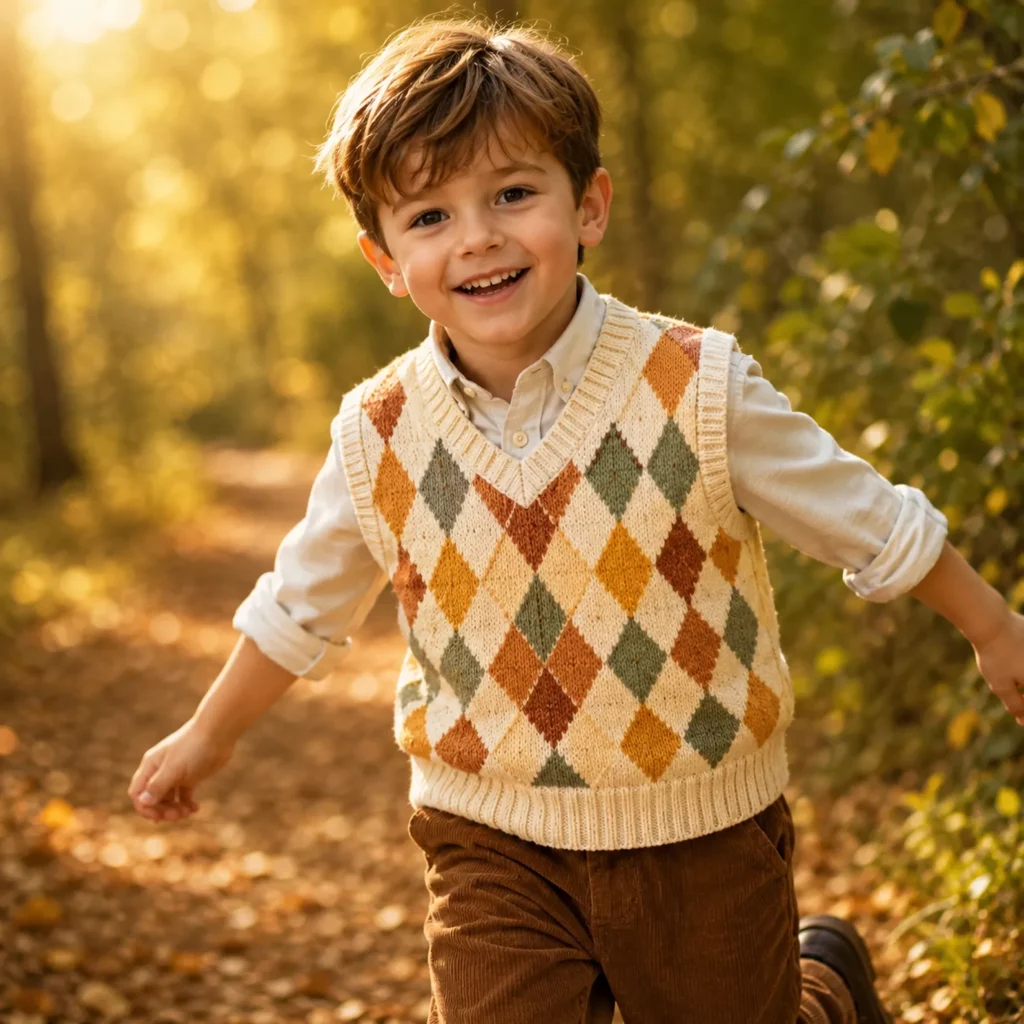
Autumn palette: olive background, tan/brown/teal diamonds, cream lines
Holiday version: forest green background, red and gold diamonds, white lines
Modern minimal: one diamond color only, tone-on-tone lattice
No argyle option: keep it solid and add a small monogram patch
Add stripes: work 1–2 contrast rounds above the ribbing for a preppy accent band
Make it a matching set: crochet a coordinating beanie with a small diamond motif
Benefits of This Crochet Project#
A crochet pattern that creates a wearable, timeless garment
Great for layering in fall, winter, and early spring
Sleeveless design makes fitting easier than full sweaters
Argyle adds a “wow” factor without complicated shaping
Easy to resize using measurements, making it reusable for multiple ages
Perfect handmade gift for birthdays, holidays, and family photos
Internal Linking Suggestions#
How to Crochet Ribbing That Looks Like Knitting
Beginner Guide to Crochet Garment Sizing and Gauge
How to Crochet a Clean V-Neck Edge
Surface Slip Stitch Tutorial for Colorwork Details
How to Seam Crochet Garments With Mattress Stitch
Best Yarn for Kids’ Wearables (Soft, Washable Picks)
Easy Crochet Hat Pattern for Matching Sets
FAQ#
Is this argyle sweater vest crochet pattern suitable for beginners?
Yes, especially if you use the surface stitch method for the argyle. The vest construction is straightforward, and the colorwork can be added afterward at your own pace.
What stitch is best for a sweater vest?
Half double crochet is a great balance of warmth, structure, and speed. It also gives a smooth fabric that shows overlay stitching clearly.
How do I adjust the vest size?
Use chest circumference and length measurements. Crochet the ribbing to the desired width, then crochet the body to the desired height. The V-neck depth can be customized by choosing where you split the front.
Can I make this in adult sizes?
Yes. The construction scales well. You’ll simply increase the panel width and body length measurements, then plan more diamonds across the front.
Should I do intarsia or surface stitching for the argyle?
If you want the easiest approach, choose surface stitching. If you want the cleanest, most “authentic” argyle blocks, choose intarsia and then add the lattice lines with surface stitching.
How do I keep the neckline from stretching out?
Use a slightly smaller hook for edging, don’t add too many stitches around the neckline, and place a decrease at the bottom of the V to keep it crisp.
What’s the best yarn for kids’ vests?
A soft acrylic or washable wool blend is usually best for comfort and easy care. Smooth yarns show the argyle pattern more clearly than fuzzy yarns.
Conclusion#
A classic argyle sweater vest is one of the most rewarding wearables you can make because it looks high-end, layers effortlessly, and gives you endless ways to customize color and fit. This crochet pattern keeps the vest construction simple and gives you two solid options for the diamond design, so you can choose the method that fits your comfort level.
If you tell me the child’s chest measurement and the yarn weight you’re using (DK or worsted), I can give you a simple stitch-count plan for the front and back panels and a diamond layout that will fit perfectly across the chest.