





Introduction#
A classic cable sweater never goes out of style. Combining warmth, texture, and timeless sophistication, this men’s crochet pattern creates a refined pullover that looks equally at home in casual settings, outdoor adventures, and smart-casual wardrobes.
Explore more intermediate sweaters crochet patterns in our pattern library.
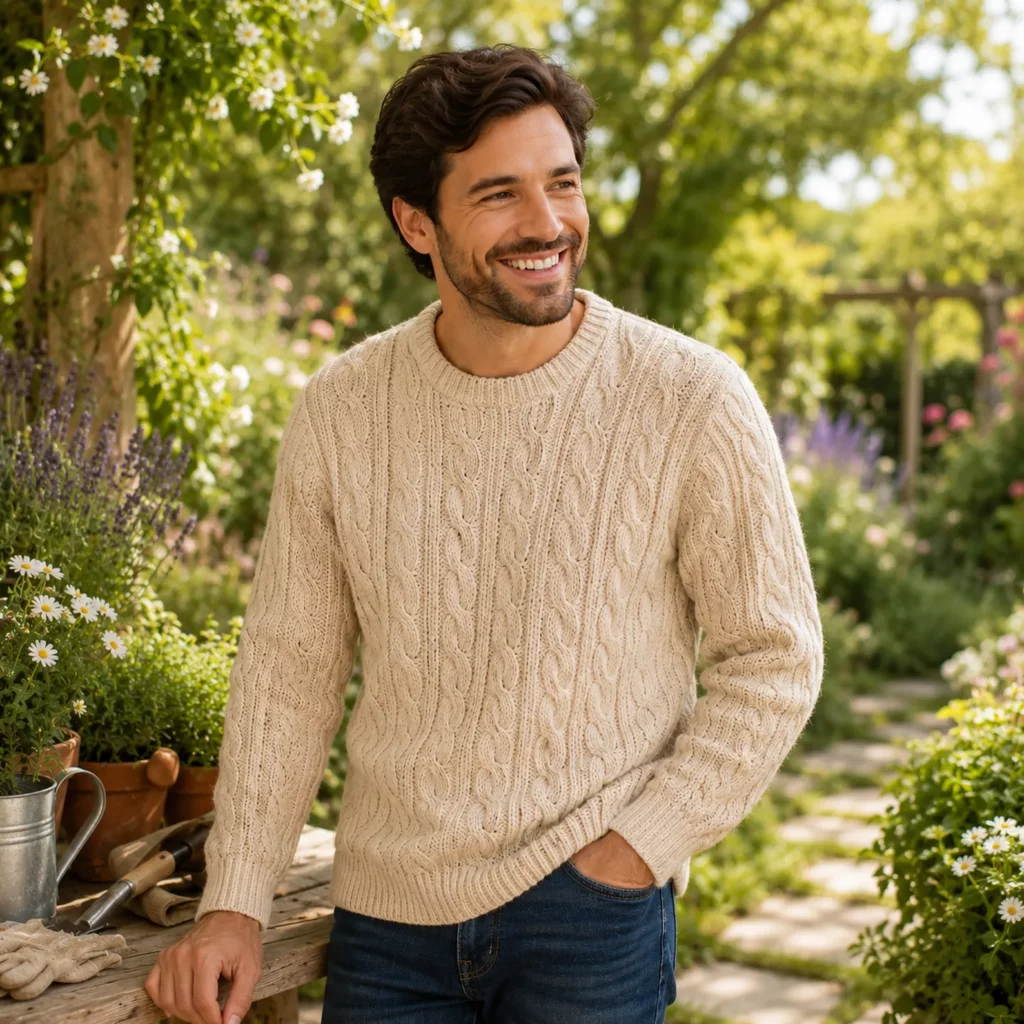
Inspired by traditional fisherman sweaters, this design features elegant cable panels running vertically across the body and sleeves, creating rich texture and visual depth. The neutral color palette enhances the classic appeal, making it a versatile garment that pairs effortlessly with jeans, chinos, and winter layering pieces.
Whether you’re searching for a crochet pattern to expand your garment-making skills, create a thoughtful handmade gift, or build a timeless wardrobe staple, this project offers both challenge and reward.
Detailed Description of the Crochet Pattern#
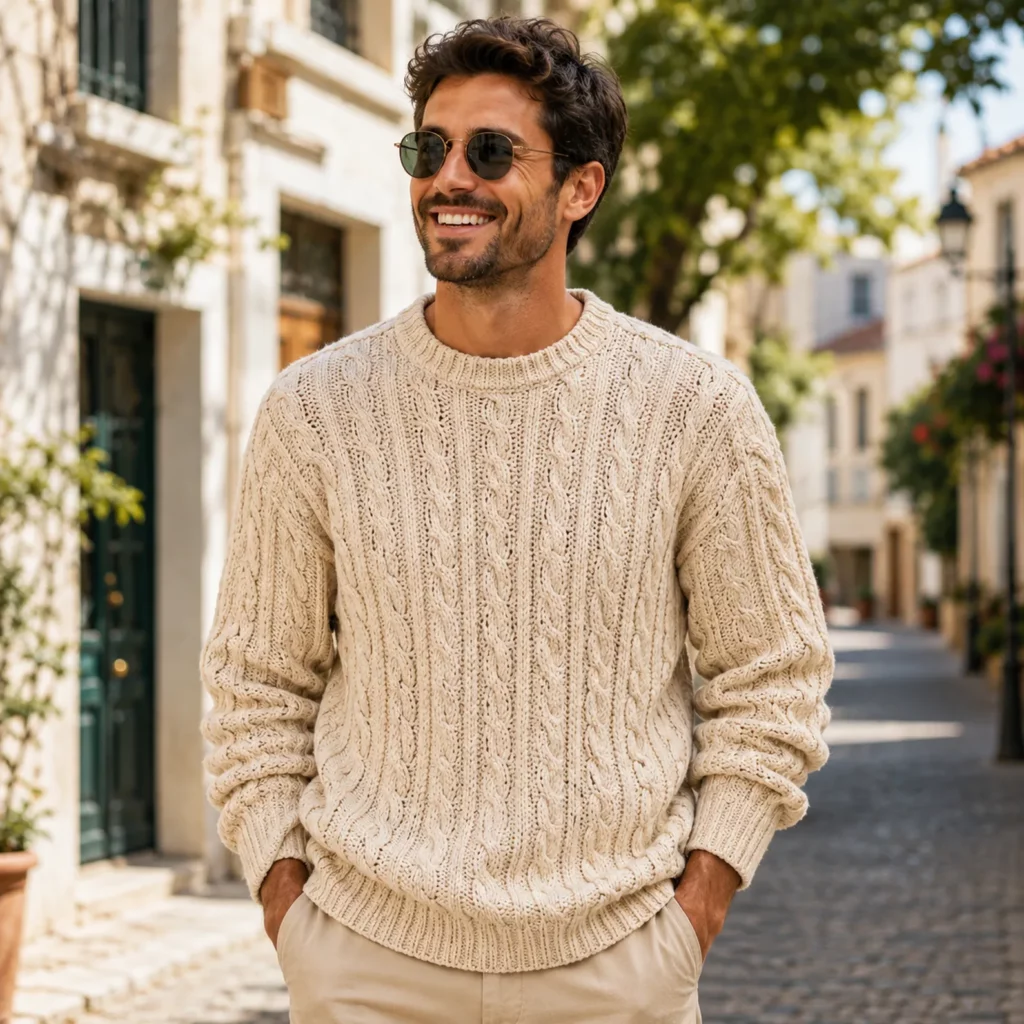
This crochet pattern creates a long-sleeve men’s pullover featuring a textured cable design, ribbed hem, ribbed cuffs, and a comfortable crew neckline.
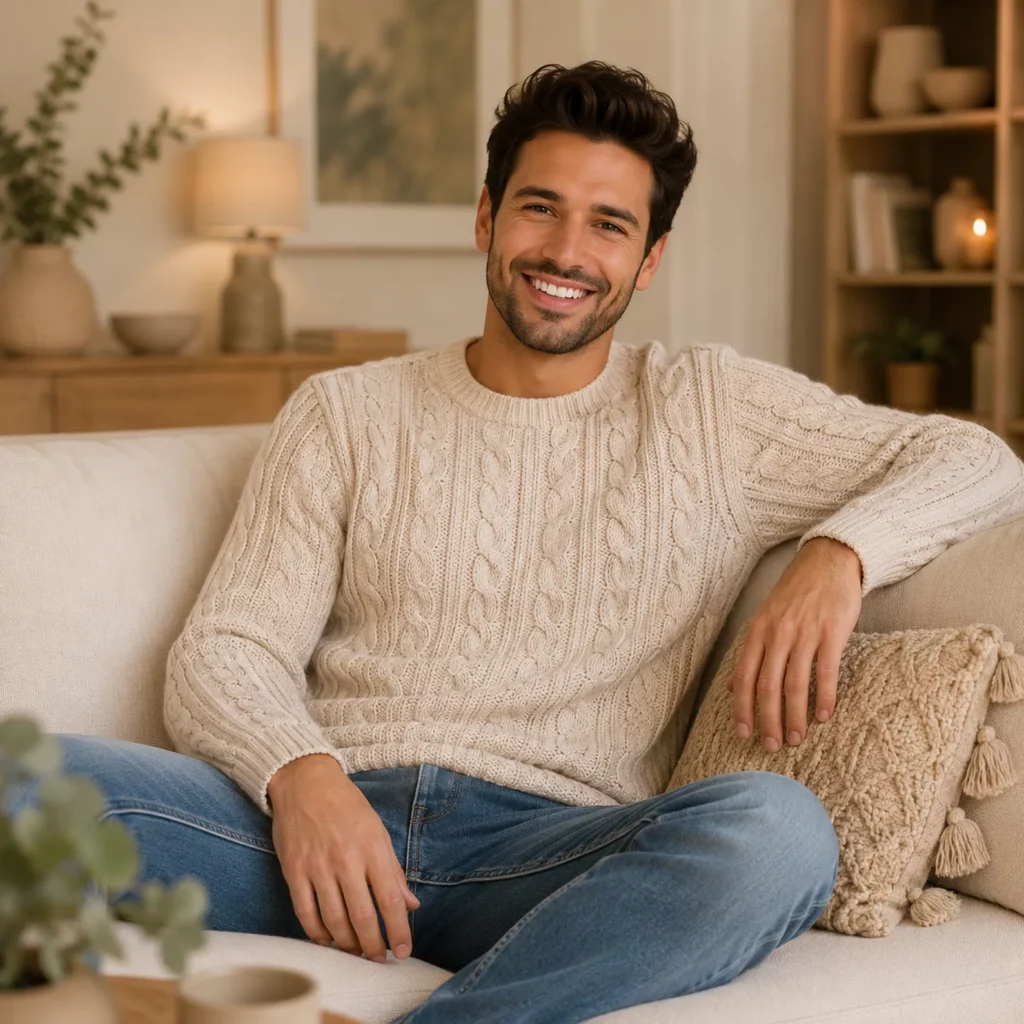
The front and back panels showcase repeating vertical cable motifs separated by textured rib sections. These raised cable columns create the appearance of traditional knitted cables while maintaining the structure and durability of crochet.
The sleeves continue the cable theme, creating a cohesive design from shoulder to cuff. Wide ribbed cuffs help maintain shape while providing a comfortable fit around the wrists.
The crew neck features a neatly finished ribbed collar that complements the overall design and adds a polished appearance.
The finished sweater offers excellent warmth, making it ideal for autumn, winter, and cooler spring days.
Skill Level Explanation#
Is This Crochet Pattern Suitable for Beginners?
This project is best suited for intermediate and advanced crocheters.
The overall construction is straightforward, but the textured cable techniques require some experience with advanced crochet stitches.
Ideal for:
- Intermediate crocheters
- Advanced crocheters
- Handmade menswear enthusiasts
- Crochet gift makers
- Experienced garment makers
Skills you’ll practice include:
- Foundation chains
- Front post stitches
- Back post stitches
- Cable crochet techniques
- Ribbing construction
- Garment assembly
- Sleeve shaping
- Neckline finishing
Materials Needed#
Choosing the right yarn is essential for highlighting the cable texture.
Recommended Yarn
Suitable yarn options include:
- Merino wool
- Wool blends
- Acrylic wool blends
- Alpaca blends
- Aran-style yarn
These fibers provide excellent stitch definition and warmth.
Yarn Weight
Best results are achieved with:
- Worsted weight yarn
- Aran weight yarn
- Light bulky yarn
Recommended Colors
Traditional cable sweaters look particularly elegant in:
- Cream
- Oatmeal
- Beige
- Charcoal gray
- Navy
- Forest green
Crochet Hook
Suggested hook sizes:
- 5.0 mm
- 5.5 mm
- 6.0 mm
Always check gauge before beginning.
Additional Supplies
- Stitch markers
- Yarn needle
- Scissors
- Measuring tape
- Row counter
Stitches & Techniques Explained#
Chain Stitch (ch)
Forms the foundation for each panel.
Double Crochet (dc)
Used throughout the sweater as the base stitch.
Front Post Double Crochet (fpdc)
Creates raised texture by working around the post of stitches.
This stitch forms the visible cable patterns.
Back Post Double Crochet (bpdc)
Worked behind the stitch post to create recessed areas that enhance cable definition.
Crochet Cable Technique
Cables are created by crossing front post stitches over one another.
This technique produces the braided appearance associated with traditional fisherman sweaters.
Ribbing
The cuffs, hem, and neckline use ribbed stitches to provide elasticity and structure.
Step-by-Step Instructions#
Crochet the Back Panel
Begin with a foundation chain matching your desired size.
Work the ribbed hem first.
Continue upward using the cable pattern repeat.
Maintain consistent stitch counts throughout.
Create the Front Panel
Work the front panel in the same manner as the back.
Continue the cable pattern while shaping the neckline near the top.
The cable columns should align visually with the back panel.
Shape the Shoulders
Gradually decrease stitches near the neckline.
Create symmetrical shoulder shaping on both sides.
Join the Shoulder Seams
Align front and back panels.
Join neatly using:
- Mattress stitch
- Slip stitch seam
- Invisible seam method
Crochet the Sleeves
Begin at the cuff.
Work ribbing first.
Continue upward using matching cable patterns.
Increase gradually to accommodate the upper arm.
Attach the Sleeves
Position sleeves evenly within the arm openings.
Sew carefully while maintaining cable alignment.
Complete Side Seams
Join the body and sleeve seams.
Ensure the garment lays flat and symmetrical.
Create the Neck Ribbing
Attach yarn around the neckline.
Work ribbed rounds until the collar reaches the desired height.
This creates the classic crew-neck finish.
Weave in Ends
Secure all yarn tails thoroughly.
Pay particular attention to seam areas and cable crossings.
Block the Finished Sweater
Blocking helps:
- Enhance cable definition
- Improve fit
- Smooth seams
- Create a professional finish
Common Mistakes and How to Avoid Them#
Cables Look Uneven
Cause:
- Inconsistent tension
Solution:
- Maintain steady tension during cable crossings
Sweater Feels Too Stiff
Cause:
- Tight crochet tension
Solution:
- Increase hook size
Neckline Too Tight
Cause:
- Insufficient neckline shaping
Solution:
- Leave a wider opening before adding ribbing
Sleeves Too Narrow
Cause:
- Not enough increases
Solution:
- Add gradual increases throughout sleeve construction
Misaligned Cable Panels
Cause:
- Stitch count errors
Solution:
- Use stitch markers and count frequently
Expert Tips for Better Results#
Use High-Definition Yarn
Smooth yarns showcase cable details better than fuzzy fibers.
Practice Cable Repeats First
Create a small swatch before beginning the full garment.
Block Before Final Photography
Blocking dramatically improves cable definition and presentation.
Measure Frequently
Garment sizing is easier to adjust during construction than after assembly.
Choose Classic Colors
Neutral shades highlight cable texture and maximize wardrobe versatility.
Variations and Customization Ideas#
Traditional Fisherman Sweater
Use cream-colored wool and bold cable repeats.
Modern Minimalist Version
Choose charcoal or black with subtle cable panels.
Oversized Winter Sweater
Increase body and sleeve width for a relaxed fit.
Mock Turtleneck Version
Extend the neckline ribbing for additional warmth.
Outdoor Adventure Sweater
Use rugged wool blends for extra durability.
Benefits of This Crochet Project#
Creates a Timeless Wardrobe Staple
Cable sweaters never go out of fashion.
Excellent Cold-Weather Garment
The textured stitches provide additional insulation.
Builds Advanced Crochet Skills
You’ll learn:
- Cable construction
- Garment shaping
- Sleeve assembly
- Ribbing techniques
Perfect Handmade Gift
Ideal for:
- Birthdays
- Holidays
- Father’s Day
- Anniversary gifts
Highly Customizable
Adjust:
- Length
- Width
- Sleeve fit
- Collar style
- Cable placement
Internal Linking Suggestions#
You may also enjoy:
- Easy Crochet Men’s Scarf Pattern
- Crochet Beanie for Men
- Beginner Crochet Cardigan Pattern
- Crochet Cable Stitch Tutorial
- DIY Crochet Winter Sweater
- Best Yarn for Crochet Garments
- Crochet Ribbing Techniques Guide
- Handmade Gift Ideas for Men
Frequently Asked Questions#
Is this crochet pattern suitable for beginners?
This project is better suited for intermediate crocheters because of the cable stitch techniques involved.
What yarn works best for cable sweaters?
Wool, merino blends, and aran-weight yarns provide excellent stitch definition.
How much yarn will I need?
Most men’s sweaters require approximately 1,500–2,500 yards depending on size and yarn weight.
Can I make this sweater oversized?
Yes. Increase panel widths and sleeve dimensions while maintaining the cable pattern repeat.
Are crochet cables difficult?
They require practice but become much easier once you understand front post stitch crossings.
Can I add a turtleneck?
Absolutely. Extend the neckline ribbing to create a folded turtleneck collar.
Is this sweater warm?
Yes. The dense cable texture creates excellent insulation for cold weather.
Can I sell finished sweaters?
Yes. Handmade cable sweaters are highly sought-after items at craft fairs, boutiques, and online marketplaces.
Conclusion#
This men’s cable sweater crochet pattern combines traditional craftsmanship with timeless style. Featuring elegant cable textures, comfortable ribbed details, and a classic silhouette, it creates a garment that looks sophisticated while providing exceptional warmth and comfort.
Whether you’re expanding your crochet garment skills, creating a meaningful handmade gift, or crafting a sweater that will remain stylish for years, this crochet pattern offers a rewarding challenge and a truly impressive finished result. With its heritage-inspired design and practical versatility, it’s a project that showcases the beauty of handmade menswear at its finest.