




Introduction#
A lightweight lace scarf is one of the most versatile accessories a crocheter can create. Elegant, practical, and timeless, it adds a touch of sophistication to any outfit while showcasing the beauty of delicate stitch work. This crochet pattern features a stunning lace design with openwork sections, textured stitch details, and a soft drape that makes it suitable for every season.
Explore more beginner scarves crochet patterns in our pattern library.
Whether you’re looking for an easy crochet pattern to improve your lace skills, a thoughtful handmade gift, or a stylish DIY crochet project, this scarf offers the perfect balance of beauty and simplicity. The airy construction creates a lightweight accessory that can be worn during spring evenings, cool summer nights, autumn walks, or layered under winter coats.
This crochet tutorial will guide you through the techniques, materials, and steps needed to create a scarf that looks elegant enough for special occasions while remaining practical for everyday wear.
Detailed Description of the Crochet Pattern#
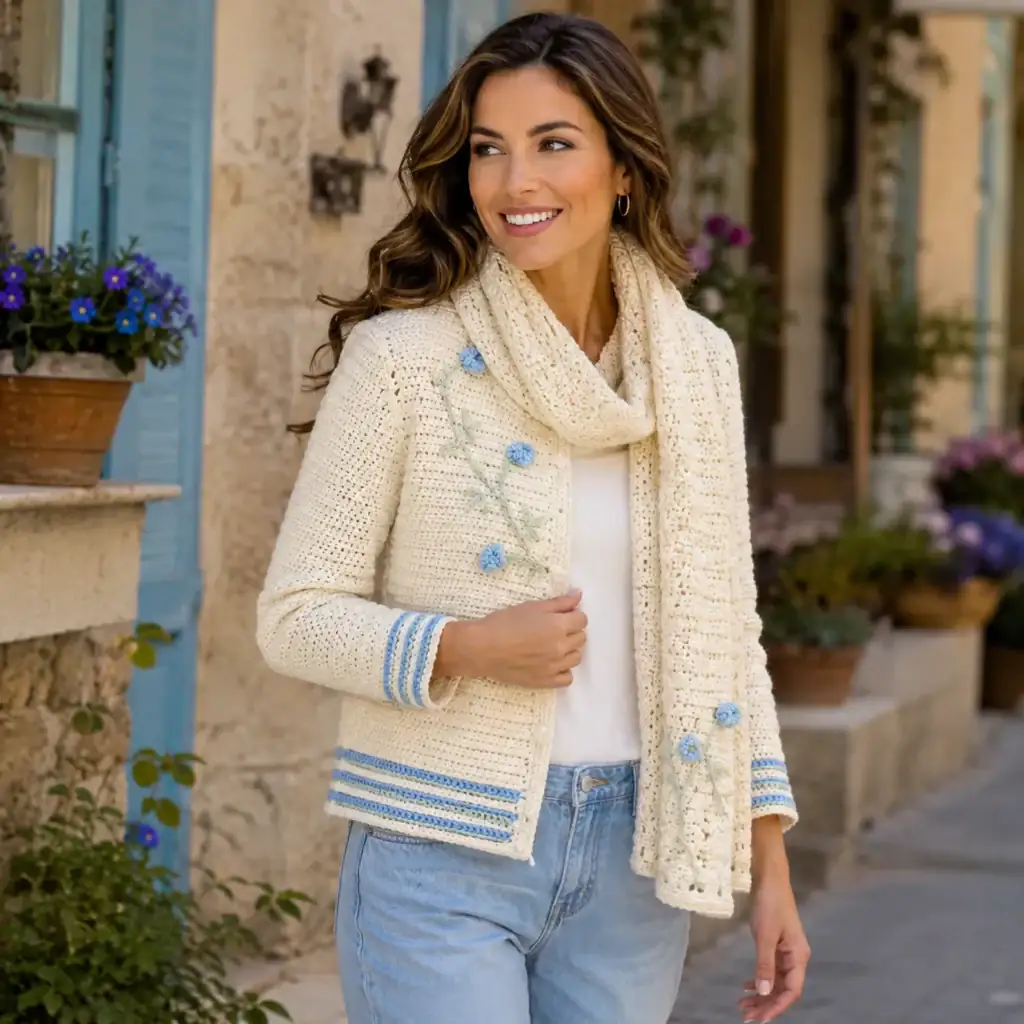
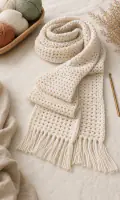
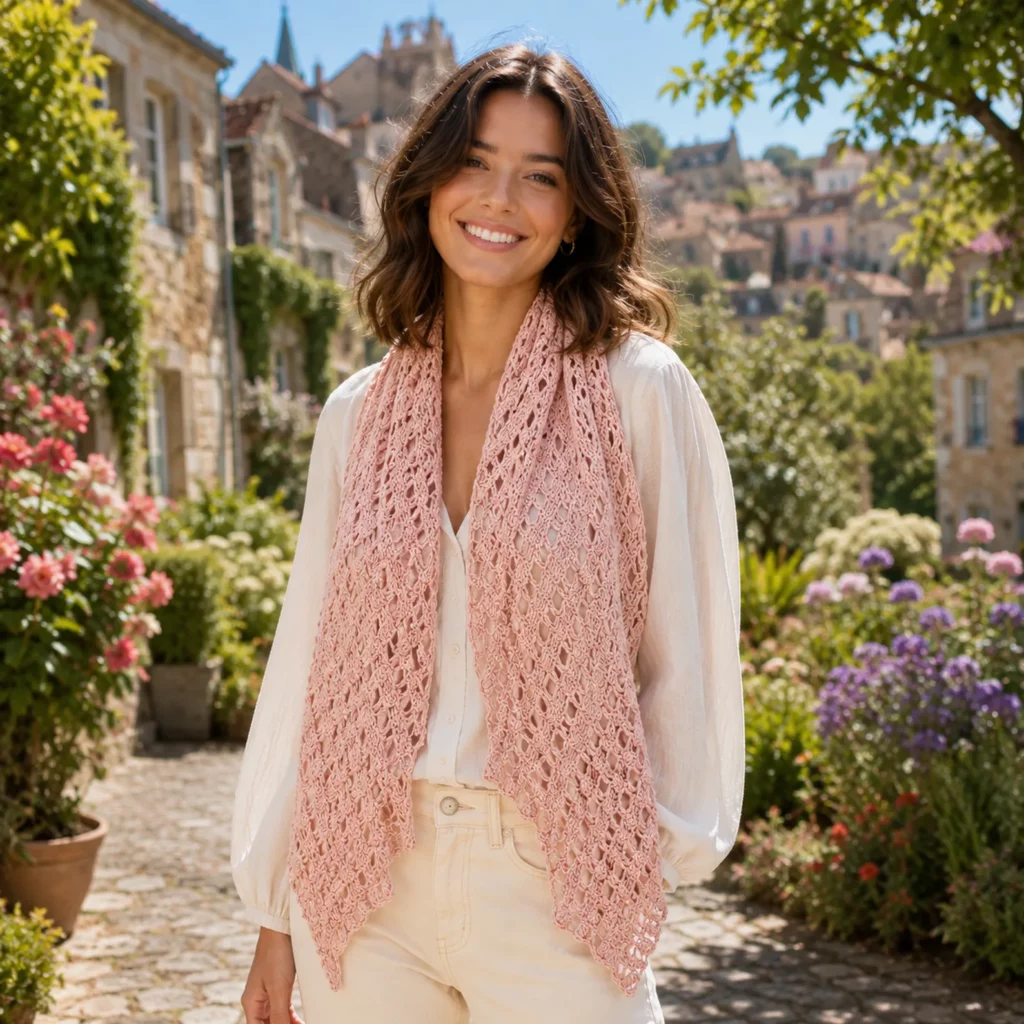
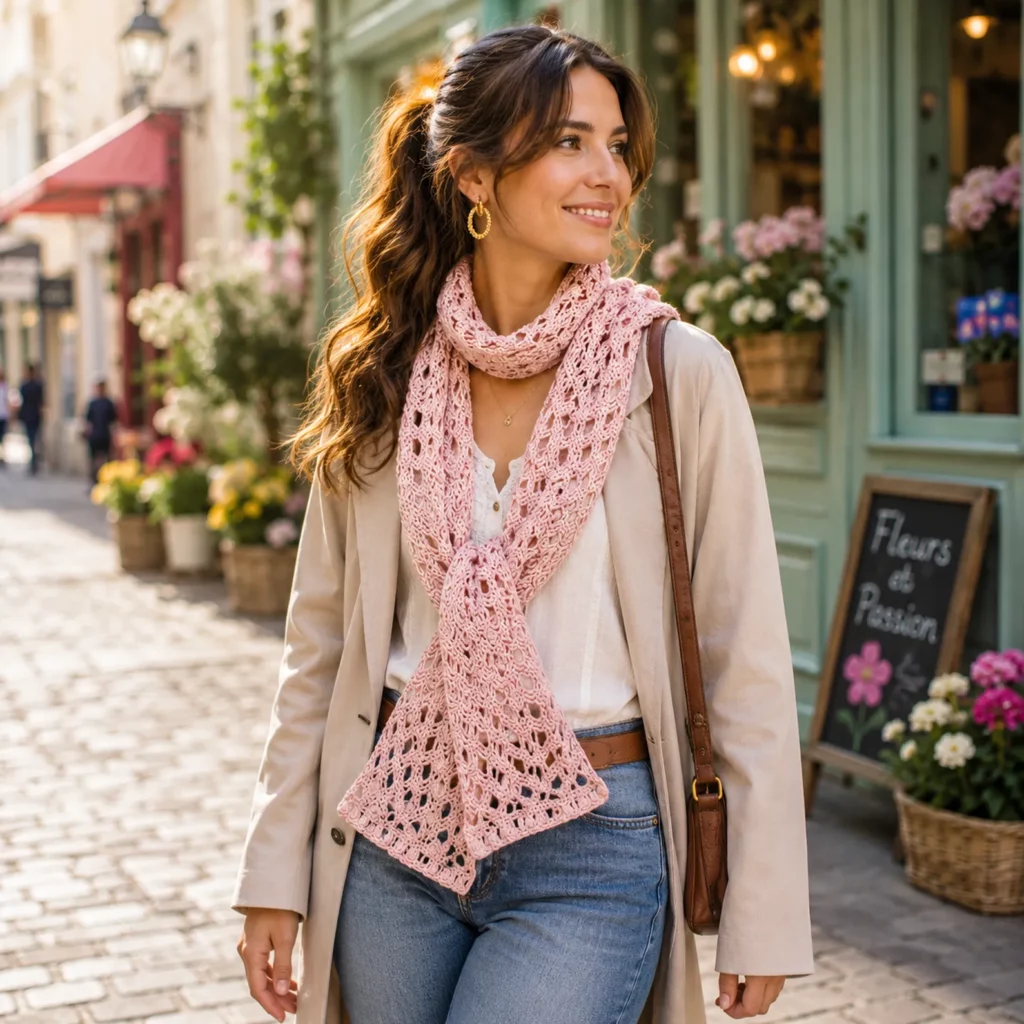
This crochet pattern showcases a sophisticated lace scarf worked in a soft blush pink shade. The design combines textured stitch sections with decorative openwork panels, creating visual interest throughout the entire piece.
One of the most striking features of this scarf is its unique center section, where textured stitches form a beautiful focal point. The scarf gradually transitions into delicate lace motifs toward both ends, producing a balanced and harmonious design.
The lightweight structure allows the scarf to drape naturally around the neck without adding excessive bulk. The openwork sections create an airy appearance that feels feminine and elegant while remaining easy to style with various outfits.
The finished scarf works beautifully as:
- A fashion accessory
- A spring scarf
- A lightweight autumn wrap
- A handmade gift
- A wedding or bridal accessory
- An elegant evening piece
- A beginner lace crochet project
Skill Level Explanation#
Beginner to Intermediate
This crochet pattern is ideal for:
- Ambitious beginners
- Intermediate crocheters
- Lace crochet enthusiasts
- Gift makers
- Fashion accessory creators
Although the scarf features lace sections, the overall construction remains straightforward and repetitive, making it an excellent introduction to lace crochet techniques.
Skills You’ll Learn
- Basic lace construction
- Creating openwork patterns
- Reading stitch repeats
- Maintaining stitch counts
- Working textured stitch combinations
- Finishing and blocking lace projects
Materials Needed#
Yarn
Choose a lightweight yarn with excellent drape.
Recommended yarn types:
- Cotton blend yarn
- Bamboo yarn
- Silk blend yarn
- Lightweight acrylic
- Merino wool blend
Suggested Weight
- Fingering weight
- Sport weight
- Lightweight DK yarn
Crochet Hook
Depending on yarn choice:
- 3.5 mm hook
- 4.0 mm hook
- 4.5 mm hook
Additional Supplies
- Stitch markers
- Yarn needle
- Measuring tape
- Scissors
- Blocking mats
- Rust-resistant pins
Choosing the Right Yarn
For lace projects, select yarn that provides:
- Excellent stitch definition
- Soft drape
- Minimal splitting
- Comfortable wearability
Solid or lightly tonal yarns often highlight lace patterns more effectively than heavily variegated yarns.
Stitches & Techniques Explained#
Chain Stitch (ch)
Forms the foundation and creates decorative lace openings.
Single Crochet (sc)
Provides stability and clean edging.
Double Crochet (dc)
Creates height and contributes to the airy lace appearance.
Treble Crochet (tr)
May be used in decorative sections to create elongated lace motifs.
Chain Spaces
Open areas that define the lace pattern.
Stitch Repeats
Repeating sequences create the consistent lace design throughout the scarf.
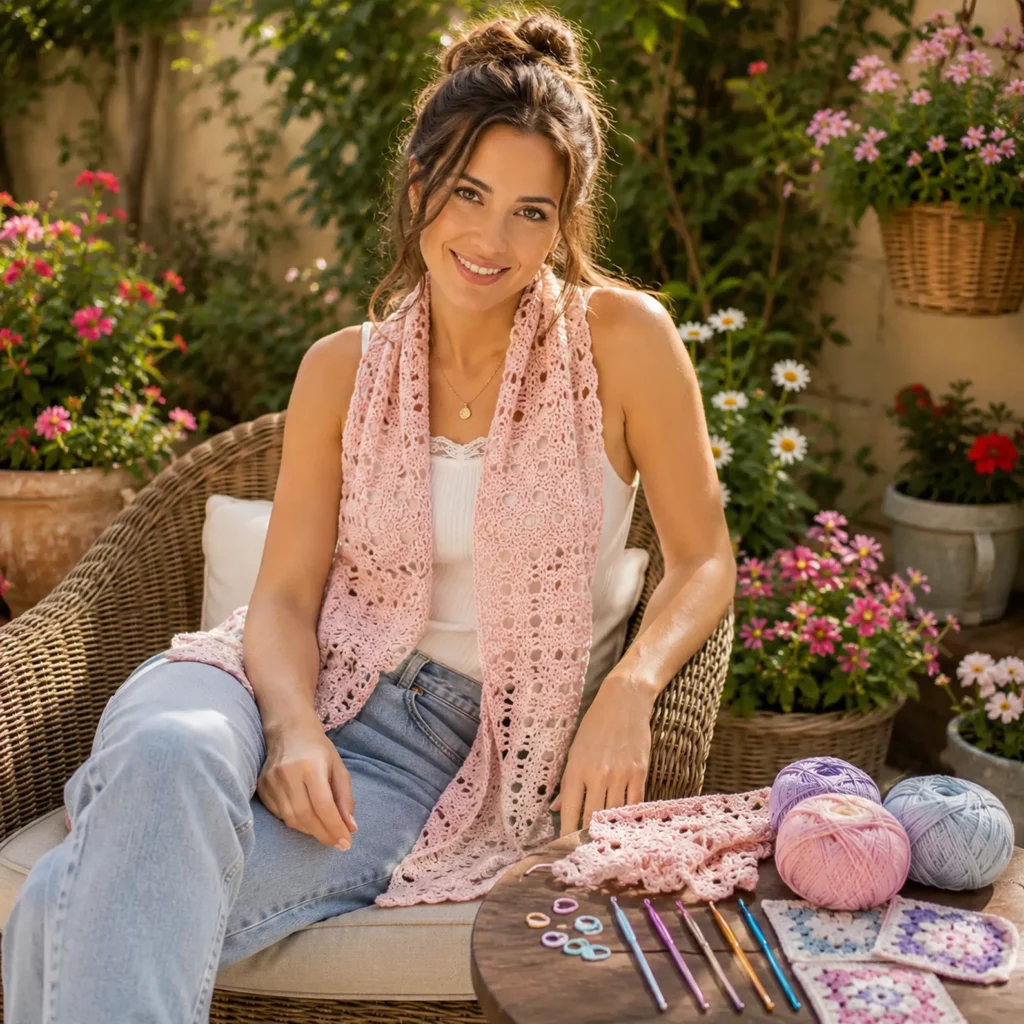
Step-by-Step Instructions#
Create the Foundation Chain
Begin by chaining the required number of stitches.
Ensure the chain remains loose enough to match the flexibility of the finished scarf.
Avoid tightening the foundation edge.
Establish the Pattern
Work the first few rows carefully.
Focus on maintaining accurate stitch counts.
Place markers if necessary to identify pattern repeats.
Build the Textured Center Section
The center portion of the scarf uses textured stitches that create visual depth.
Work each row evenly.
Check your tension regularly to maintain consistency.
Begin the Lace Panels
Introduce chain spaces and decorative stitch combinations.
These open sections create the elegant appearance of the scarf.
Pay close attention to stitch placement.
Continue the Pattern Repeats
Repeat the established sequence until reaching the desired length.
The repetitive nature of the pattern makes it relaxing and enjoyable to crochet.
Create the Opposite End
Mirror the lace motifs and textured sections to achieve a balanced design.
Consistency is key for a professional finish.
Add Finishing Rows
Work final edging rows to frame the lace pattern.
These rows provide structure and enhance the finished appearance.
Weave in Ends
Use a yarn needle to secure all loose ends.
Take extra care when weaving through lace sections.
Block the Scarf
Blocking is essential for lace projects.
Gently shape the scarf.
Pin the lace openings evenly.
Allow it to dry completely before removing the pins.
Common Mistakes and How to Avoid Them#
Losing Stitch Count
Problem:
Lace patterns can become distorted when stitches are missed.
Solution:
Count stitches frequently and use stitch markers.
Uneven Tension
Problem:
Some sections appear tighter than others.
Solution:
Maintain a relaxed grip and practice consistent tension.
Incorrect Lace Placement
Problem:
Openwork motifs become misaligned.
Solution:
Check each repeat before beginning the next row.
Skipping Blocking
Problem:
The lace pattern appears compressed.
Solution:
Always block the finished project.
Tight Foundation Chain
Problem:
The scarf edges curl or pull inward.
Solution:
Use a larger hook for the starting chain if necessary.
Expert Tips for Better Results#
Use stitch markers to identify pattern repeats.
Choose light-colored yarn for easier stitch visibility.
Block aggressively enough to fully open the lace design.
Measure the scarf periodically during construction.
Practice the lace repeat on a small swatch before starting.
Keep written notes if modifying the pattern.
Use a yarn with excellent drape for a luxurious finish.
Variations and Customization Ideas#
Longer Luxury Scarf
Add extra pattern repeats for a dramatic oversized scarf.
Narrow Fashion Scarf
Reduce width while maintaining the lace motif.
Wedding Scarf
Use white, ivory, or champagne-colored yarn.
Color Ideas
Popular choices include:
- Blush pink
- Lavender
- Cream
- Ivory
- Sage green
- Dusty blue
- Soft gray
Seasonal Versions
Spring:
Cotton or bamboo yarn.
Autumn:
Merino wool blend.
Winter:
Alpaca blend for additional warmth.
Decorative Additions
Consider adding:
- Tassels
- Fringe
- Beaded accents
- Picot edging
- Shell borders
Benefits of This Crochet Project#
Elegant and Timeless
A classic accessory that never goes out of fashion.
Lightweight and Comfortable
Easy to wear throughout the year.
Portable Project
Perfect for travel crochet and relaxing evenings.
Great Skill Builder
Introduces lace techniques without overwhelming complexity.
Excellent Gift Option
Makes a thoughtful handmade present for birthdays, holidays, and special occasions.
Budget Friendly
Requires relatively little yarn compared to larger garments.
Internal Linking Suggestions#
You may also like:
- Easy Crochet Shawl Pattern
- Beginner Lace Crochet Tutorial
- Crochet Wrap Pattern
- Lightweight Summer Crochet Scarf
- Crochet Cowl Pattern
- Crochet Accessories for Beginners
- DIY Crochet Gift Ideas
FAQ Section#
Is this crochet pattern suitable for beginners?
Yes. Beginners with basic crochet knowledge can successfully complete this project, especially because the lace repeats become easy to memorize.
What yarn works best for a lace scarf?
Lightweight yarns such as cotton blends, bamboo, silk blends, and fine merino wool provide excellent drape and stitch definition.
How long should a crochet scarf be?
Most scarves measure between 60 and 80 inches long, but you can customize the length according to personal preference.
Do I need to block the finished scarf?
Absolutely. Blocking is one of the most important steps in lace crochet because it opens the stitch pattern and enhances the overall appearance.
How much yarn will I need?
The amount varies depending on length, width, and yarn weight. Most lace scarves require significantly less yarn than shawls or sweaters.
Can I use multiple colors?
Yes. Ombre effects, gradient transitions, and color-blocking techniques can create unique and beautiful variations.
Is this scarf suitable for all seasons?
Yes. The lightweight lace construction makes it versatile enough for spring, summer evenings, autumn layering, and mild winter weather.
Conclusion#
This elegant lace crochet scarf pattern combines timeless beauty with practical wearability. Featuring delicate openwork sections, attractive texture, and graceful drape, it offers an enjoyable crochet experience for both beginners and experienced makers. Whether you’re creating a handmade gift, expanding your accessory collection, or learning new lace techniques, this crochet pattern delivers stunning results that will remain stylish for years to come. With the right yarn, careful stitching, and proper blocking, you’ll create a sophisticated scarf that showcases the artistry and elegance of crochet.